

How Long Does It Take to Replace a Boiler? Timescales by Boiler Type and Job
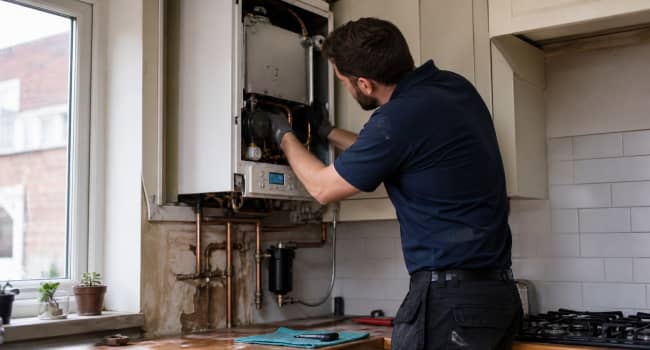
Your boiler has packed up, or it’s been limping along for a while and you’ve finally decided enough is enough. Now the real worry kicks in: how long does it take to replace a boiler, and do you need to book time off work? It’s a fair question, especially in the middle of a London winter.
The honest answer depends on the type of swap you’re doing and on what’s hiding behind the old unit. Two homes with the same boiler can have very different timelines.
Below you’ll find the timings for each type of job, what stretches the work, how the day runs hour by hour, and how to get your home ready.
TL;DR
- A like-for-like combi swap in the same spot usually takes 4–8 hours and is often finished in one working day.
- Changing boiler type (for example regular to combi) typically takes 1–2 days, because tanks, cylinders and pipework change.
- Moving the boiler to a new location usually takes 1–3 days.
- A power flush can add several hours up to a day, and a new flue route or pipework repairs also extend the job.
- Heating and hot water are normally off from the morning start until commissioning, and a Gas Safe registered engineer must do the work.
Table of Contents
- How Long Does It Take to Replace a Boiler?
- How Long Does It Take to Replace a Combi Boiler?
- If You’re Changing Boiler Type or Moving the Boiler
- What Makes a Boiler Replacement Take Longer?
- How Long Does It Take to Replace a Boiler With a Power Flush?
- A Boiler Replacement Day, Hour by Hour
- How to Prepare So the Job Runs to One Day
- How Long Does It Take to Replace a Boiler From Booking to Install Date?
- What Happens After the New Boiler Is Fitted?
- How Much Does It Cost to Replace a Boiler?
- Frequently Asked Questions
How Long Does It Take to Replace a Boiler?
A straightforward like-for-like boiler replacement typically takes 4–8 hours, which is usually one working day. That covers removing the old boiler, fitting the new one, checking the system and commissioning it. Longer jobs are conversions, relocations and installs that need extra work.
“Replace” covers more than swapping one box for another, whether you’re replacing a gas boiler or installing a new boiler of any type. The engineer isolates the gas, water and electricity, drains the system, removes the old boiler, mounts the new one and connects the pipework, flue and condensate pipe. Then they refill the system and commission the boiler. Every one of those steps is part of the time quoted.
The range comes from your property and access, not from how fast the engineer works. A boiler on an open kitchen wall with good pipework is quick. A boiler squeezed into a tight cupboard with old pipes takes longer. Replacing a boiler is a moderate job: a skilled one-day task for a like-for-like swap, but it involves gas, so it must be done by a Gas Safe registered engineer.
| Job type | Typical time | Heating and hot water off |
| Like-for-like combi swap | 4–8 hours | Same day, restored by late afternoon or evening |
| Like-for-like regular or system boiler | About 1 day | Usually one working day |
| Boiler type conversion | 1–2 days | One to two days |
| Boiler relocation | 1–3 days | One to three days |
How Long Does It Take to Replace a Combi Boiler?
Swapping a combi boiler for a combi in the same position typically takes 4–6 hours. Allow up to a full day if the job also includes commissioning extras, a system flush and tidying up. The job is quicker because the new boiler reuses the existing gas, water, flue and condensate connections.
Most modern replacements are condensing boilers, which need a condensate pipe to carry away the acidic water they produce. If your old boiler already has a neat condensate route, that part is simple. If it doesn’t, the engineer needs extra time to run one.
An undersized gas pipe can also add time. A new boiler needs the right gas supply to run properly, and if the existing pipe is too narrow, it has to be upgraded. Here’s what keeps a combi swap to a day, and what stretches it:
- Keeps it to a day: the new boiler goes in the same spot, uses the same flue position, and the pipework is in good condition.
- Keeps it to a day: the boiler is easy to reach, with clear space around it and a straightforward condensate route.
- Stretches it: the new boiler needs a different flue position or a longer flue run.
- Stretches it: ageing pipework, a gas pipe that’s too small, or a system that needs a flush before the new boiler goes on.
If You’re Changing Boiler Type or Moving the Boiler
Converting from a regular or system boiler to a combi usually takes 1–2 days, and relocating a boiler can take 1–3 days. Tanks, cylinders, pipework, gas and flue all change, so there’s simply more to do than a straight swap.
Regular or system boiler to combi: 1–2 days
A combi doesn’t need a cold water tank in the loft or a hot water cylinder. So the engineer removes the tank and cylinder, caps or reroutes the old pipework and does some loft work. Taking out a cylinder adds time, because the pipes around it have to be reworked.
Combi to system boiler (adding a cylinder): 1–2 days
Changing from a combi to a system boiler means fitting a hot water cylinder and the pipework that serves it. The job can run longer than two days if the cylinder cupboard needs preparing first, for example clearing space or adding shelving to carry the weight.
Moving the boiler to a new room or wall: 1–3 days
A new location needs a new gas run, flue, condensate route and pipework. That can mean lifting floorboards or opening up walls, so the time depends on how far the boiler is moving and how easy the new route is. Making good afterwards, such as plastering and decorating, is extra and usually done by other trades.
What Makes a Boiler Replacement Take Longer?
Anything that goes beyond a simple swap adds time, and some of it only shows up once the old boiler is off the wall. These are the usual causes:
- New flue route or extension: flue changes must meet current requirements, so extra lengths or bends mean extra hours. Flues in voids have their own rules too.
- Undersized or damaged gas pipework: if the gas pipe can’t supply the new boiler properly, it needs upgrading before the job can finish.
- Condensate pipe rerouting: external runs can freeze in winter, so the engineer may need to reroute the pipe inside or shorten the outside section.
- Power flush or system clean: adds several hours up to a day, depending on the system.
- Corroded, leaking or hard-to-reach pipework: often only found once the old boiler is removed.
- Awkward access: lofts, tight cupboards and high-rise flats all slow the work down.
- Asbestos or damaged old flue materials: these must be assessed before work continues, which can pause the job.
- Parts delivery delays: a boiler or part that isn’t in stock or on the van can push the work to another day.
- Extras fitted at the same time: a magnetic filter, scale reducer or new controls each add a little time.
The biggest time risk is what’s found after the old boiler comes off. Corroded pipes, a blocked condensate route or a flue that doesn’t meet current requirements can all appear at that point. That’s why a pre-install survey is the best predictor of how long your job will really take.
How Long Does It Take to Replace a Boiler With a Power Flush?
A power flush typically adds several hours up to a full day to a boiler replacement. The exact time depends on the size of your system, the number of radiators and how much sludge is in the pipes.
A power flush cleans the heating circuit, not the boiler itself. The engineer connects a pump to the system and pushes water through it to shift sludge and rust. Engineers recommend a clean system on older setups to protect the new boiler, and many warranties require one. If your system is newer and clean, a flush may not be needed at all. Cold spots on radiators can be a sign of sludge that a flush would clear.
A Boiler Replacement Day, Hour by Hour
On a typical like-for-like combi swap, the engineer arrives at around 8am, and your heating and hot water usually come back by the afternoon or early evening. This is how the boiler replacement process tends to run. The times are typical, not fixed, and they add up to about 7–8 hours, the upper end of the range. On a quick job with good access, some steps overlap and the day is shorter.
- Arrival and walk-through (about 30–45 minutes): the engineer protects floors, checks the plan with you and confirms the work.
- Isolating and draining down (about 1 hour): gas, water and electricity are turned off and the system is drained.
- Removing the old boiler (about 1 hour): the old unit comes off, along with any old flue and fittings that need replacing.
- Fitting the new boiler (about 2–3 hours): the new boiler, flue, condensate pipe and connections go in.
- Refilling and testing (about 1 hour): the system is refilled, inhibitor is added, pressure is tested and any filter or controls are fitted.
- Commissioning (about 1 hour): safety checks and flue gas analysis confirm the boiler is working safely.
- Handover: the engineer completes the Benchmark checklist, shows you how the boiler works, goes through warranty details and clears up.
A professional boiler installation covers the survey, supply and fit of the new boiler, commissioning, the Benchmark checklist and Building Regulations notification, so the paperwork is dealt with as part of the job.
Gas, flue and appliance work must be done by a Gas Safe registered engineer, so never attempt any of the steps above yourself. Ask to see their Gas Safe ID card before work starts. The engineer also notifies the installation under Building Regulations through a competent person scheme, and you receive a certificate afterwards.
If you smell gas at any point, leave the property, avoid switches and flames, and call the National Gas Emergency number on 0800 111 999.
How to Prepare So the Job Runs to One Day
A bit of preparation keeps the job on track. The engineer needs access, parts on hand and a house that’s ready for a day without heating. Sort these beforehand:
- Clear a 1 metre space around the boiler and a path to it. Clear loft or cupboard access too if tanks are being removed.
- Find your stopcock and check it turns freely.
- Make sure the engineer can reach the gas, water and electricity shut-off points all day, including the meter cupboard.
- Agree the flue position, condensate route and any visible pipework at the survey, not on the day.
- Confirm the new boiler and any parts are delivered or on the van before the start date.
- Plan for no heating or hot water for the working day. In winter, have a fan heater, a kettle and somewhere else to shower if needed.
- Arrange parking and building access. In flats and many London streets, permits and access can slow things down if they aren’t sorted early.
- Secure pets and tell everyone in the house that the water and power will be briefly off.
Pro Tip: Know where your stopcock is before the engineer arrives. They need to shut the water off at the start, and a seized or hidden stopcock can hold up the whole job. It’s the same valve you’d turn off in an emergency leak.
How Long Does It Take to Replace a Boiler From Booking to Install Date?
After a survey and quote, a planned boiler replacement is often booked within days to a couple of weeks. An emergency replacement can sometimes happen the same or next day if the boiler is in stock. Lead time is separate from install time, which is the work itself.
Lead time covers the survey, the quote, choosing the boiler, booking the date and delivery. Install time is the 4–8 hours (or 1–3 days) of actual work. Demand rises in autumn and winter, so booking can take longer when the first cold snap hits. If your boiler is already struggling, get a survey done before the busy season. Our guide to finding a trusty boiler engineer helps you choose who to book.
What Happens After the New Boiler Is Fitted?
After a new boiler is fitted, you should receive a completed Benchmark checklist, confirmation of the Building Regulations notification and a demonstration of the controls. Then register the warranty within the manufacturer’s deadline. Here’s what you should end up with:
- A completed Benchmark checklist and commissioning record.
- Confirmation that the installation has been notified under Building Regulations.
- Warranty registration. Most manufacturers want this done within a set period, so check the paperwork for the deadline.
- A demonstration of the controls and the pressure gauge.
Check the boiler pressure now and then. When the system is cold, the gauge should read about 1–1.5 bar, as set out in your manual. Book an annual service too. Many warranties require one, and a boiler that’s regularly maintained is more likely to have small faults caught early.
How Much Does It Cost to Replace a Boiler?
Boiler replacement costs vary widely, so a fixed price is unreliable. The cost depends on the boiler type, output, flue changes and extras, so get a written quote after a survey rather than relying on a generic figure.
What pushes the price up or down is fairly predictable. A like-for-like swap costs less than a conversion or relocation, because there’s less to do. Boiler efficiency ratings also affect running costs over the years, not just the day-one price. The main cost drivers are:
- Like-for-like swap versus a conversion or relocation.
- Boiler output (kW) and the brand you choose.
- Flue and pipework changes.
- Whether you need a power flush.
- New controls, such as a smart thermostat.
- London labour rates and the length of warranty offered.
Frequently Asked Questions
How long does it take to replace a boiler PCB, pump or fan?
Replacing a part such as a PCB (the boiler’s circuit board), pump or fan usually takes 1–3 hours, depending on the boiler type and whether the part is in stock. That is a repair, not a replacement, and it counts as Gas Safe work. Only a Gas Safe registered engineer should open the boiler casing, and it’s worth asking them to confirm the part is on the van before they start.
Can I stay in the house while the boiler is being replaced?
Yes, you can stay at home. Expect no heating or hot water for the working day, and the water and power will be briefly off while the engineer works. Keep children and pets away from the work area. In winter, plan ahead with warm clothes, a fan heater and somewhere else to wash.
Do my radiators need bleeding after a new boiler is fitted?
Sometimes. The engineer refills the system with water, which can leave air in the radiators. If the top of a radiator stays cold once the heating is back on, bleed it with a radiator bleed key, then check the pressure gauge reads about 1–1.5 bar when the system is cold. Top it up with the filling loop as your manual describes. If radiators stay cold, call your installer.
Do I need to be at home all day?
An adult should be there at the start to agree the plan and again at the end for the handover. In between, agree with the engineer how they will get access if you need to go out. They will need to reach the stopcock, the gas meter and the electrics throughout the day, so don’t leave any of those areas locked.
Should I turn off my heating before the engineer arrives?
If the engineer asks, switch the heating off the evening before. That lets the boiler and system cool down, so draining down and removing the old boiler is safer and quicker. If you have a hot water cylinder, the water in it may still be hot, so follow the engineer’s advice. Don’t touch the boiler or its pipework yourself.
Conclusion
A like-for-like boiler replacement is normally a one-day job. Conversions and relocations take longer, and anything unexpected found behind the old boiler can add more time.
The key step is to get a survey first. A survey, not a generic estimate, tells you how long your job will really take. Then use a Gas Safe registered engineer for the work.
How Long Does It Take to Replace a Boiler? Timescales by Boiler Type and Job
Need help? Hire the London Property Service experts today by giving us a call on 020 3078 5920.